Monday, June 29, 2026

Well, MY Bible Says...

 Don’t Be a Karen. Please.

The Evangelical/Fundamentalists have created a mindset that leaves me cold, and it can be summed up in one phrase: 

“Well, MY Bible says….”

But does it really? If you consider where all these books in the volume we call a Bible came from, it just isn’t that cut and dried.


 Culture Considerations

The various books of the Bible were written over centuries by different cultures to different audiences in all kinds of situations that we just don’t take into account anymore.

For instance, consider the ever-popular verses to keep women in their place-

Let your women keep silence in the churches: for it is not permitted unto them to speak; but they are commanded to be under obedience as also saith the law. And if they will learn any thing, let them ask their husbands at home: for it is a shame for women to speak in the church. 1 Cor. 14:34-35

Paul’s audience and the culture of the time has to be taken into account. This was written to people living in the Roman culture of patriarchy which was law at the time.  Patriarchy was a given, a way of life for centuries.

Patriarchy exists in the Bible because the Bible was written in a patriarchal world.  (The Making of Biblical Womanhood by Beth Allison Barr, p. 3.  Link below.)

Point being, we can’t just read the text at face value without considering the context.


What Does THAT Mean? Really?

Then there’s the translation aspect. The original text was written in languages few of us have been taught. The original manuscripts have been translated over and over, then there have been translations of translations over the centuries, to the point that the original meaning is often questionable at best. Then you add to this the absolute fact that agendas have been translated into versions, and you have some serious questioning to do.

Consider this quote from Wikipedia:

King James issued directives to ensure the translation adhered to the ecclesiology of the Church of England, reflecting its episcopal structure and doctrines, including the belief in an ordained clergy. (https://en.wikipedia.org/wiki/King_James_Version)

The king decided he wanted his version to protect the power of the clergy. He had an agenda. He liked his hierarchical structure of power that subjugated the masses and he wasn’t about to undermine that.  And this is KJV, the version so very many of us were taught to believe was so accurate and reliable.  Surprise.

image: https://commons.wikimedia.org/wiki/File:Bible_from_1300_(17).jpg


 You COULD Be Wrong

This all goes along with a prevailing attitude of certainty.  "I know that I know."  Which leaves no wiggle room, no space for considering another point of view, no space for the vague possibility that just maybe things might not be as they appear.  And that certainty will inevitably lead to an arrogant, know-it-all attitude which, frankly, is more childish than anything else.  The older I get, the more I realize I just don't know.  

Churchianity is rife with certainty.  So many of us have been indoctrinated into the mindset that you have to have everything "right", that your doctrine is "biblical" and thus above reproach.  Thus, anyone that takes issue with anything you believe is just simply wrong.  And so much of this goes back to the whole "MY Bible says..." attitude.

We won't influence anyone with an arrogant, know-it-all Karen attitude like that.  So when someone wants to get feisty and rolls out, “Well, MY Bible says…” you can take a step back and consider how it just may not.  Let's just be nice.


Recommended Reading 


The Sin of Certainty by Peter Enns


The Making of Biblical Womanhood by Beth Allison Barr


Thursday, March 20, 2025

It's the System, Stupid! Hierarchy in the Church


IT'S THE SYSTEM, STUPID!*

Traditional Church: Invitation to Trouble

Basic traditional, institutional church structure is a problem. It’s modeled after man-made political/cultural systems that require a division between leaders and followers, aka the clergy/laity divide. The key word here is “divide/division”.  This divide has created a system that, generally, leaves power in the hands of a few and the rest just warming pews and filling the offering plate.  Abusive, narcissistic people readily take advantage of this and the result is seen in news reports continually coming out about ministry failings.  This post will look at how the typical church structure is anything but biblical and lends itself by far too easily to abuse.


Hierarchy

vs

 The Priesthood of All Believers

But Jesus called them unto him, and said, Ye know that the princes of the Gentiles exercise dominion over them, and they that are great exercise authority upon them. But it shall not be so among you: but whosoever will be great among you, let him be your minister; And whosoever will be chief among you, let him be your servant. Matt. 20:25-27 KJV

And hath made us kings and priests unto God and his Father; to him be glory and dominion for ever and ever. Amen. Rev. 1:6 KJV

Churches are set up with hierarchy- the so-called clergy/laity divide. The leaders and the followers. The anointed and the not-so-anointed. And when the system goes to seed, you have the ones that hear from God for you so you don’t have to, and the rest of us poor wretches that just sit there saying, “Feed me! Feed me!” When the system breeds abuse, you get the Anointed One up front espousing his/her great wisdom from on high while the dumb sheep check their brains at the door and sit in the pews, getting indoctrinated into whatever said Anointed One desires. That pulpit and sermon are things that should never have been in the first place. It’s a tradition taken from Greek oratory, not from early Christianity. (See Pagan Christianity, Frank Viola, chapter 4.)

We should be functioning in the "priesthood of all believers" concept which the New Testament introduces. But the course of history pulled the Church right back into the world's way of doing things.

Again, this entire set-up should never have been. Now it’s accepted and expected. And it’s abused all the time. Churches should have multiple leaders working equally as facilitators, not dictators. Their job is to make disciples, not to rule, and certainly not to put on a show. Elders are just simply older and have experience that will help younger believers. Groups should be run by consensus, not one-man/woman rule. 

Then there’s the other side of the coin- anyone that takes a position as “pastor” is asking to get burned out. We are supposed to be building one another up, not exhausting one leader with umpteen needy sheep screaming for help.  Pastors burning out can also be attributed to the bullies in the pews.  I've seen it both ways.

 All have a part, all have gifts, all have callings, all should be included and contributing one way or another.  For the purposes of this post, I'll be focusing on the abusive leader side of the coin.  This is not to minimize the abuse that goes the other way with the burned out pastor.  But with the overwhelming amount of abuse being exposed now, it seems fitting to concentrate on that side of it.

This brings me to another point. Particularly in non-denominational churches, you’ve got self-proclaimed leaders just showing up somewhere, starting their church, and claiming that they are “called” to pastor. And we just take their word for it. It’s a welcome mat for a controlling narcissistic manipulator. In other systems, people say they are “called”, then head off to seminary and get their degree. But it’s all assuming they actually hear from God. And we just take their word for it.  In an ideal setting, all are on equal footing with equal say, and one bad apple would be hard pressed to bull in and take over, proclaiming their oh-so-awe-inspiring anointed-ness.

Most of us have been in systems that promote that "umbrella" diagram of hierarchy.  This has cemented the theology in our thinking, leading us to assume most of us have no authority to speak of, particularly if you're a woman.  The umbrella diagram illustrates the "covering doctrine" which is espoused just about everywhere now.  This will be elaborated upon later.

A hierarchical system of leaders and followers, regardless of the brand of Christianity, can and does feed that narcissistic need for superiority, attention and center stage. It gives abusive leaders a whole flock of dumb sheep to turn into enablers that feed their ego, a whole congregation of people to use and abuse.  Think megachurches.  Small churches are much less apt to fall into this trap.

We are supposed to be facilitating the priesthood of all believers.

You also, as living stones, are being built up as a spiritual house for a holy priesthood, to offer up spiritual sacrifices acceptable to God through Jesus Christ. 1 Pet. 2:5 NASB

But you are a chosen generation, a royal priesthood, a holy nation, His own special people, that you may proclaim the praises of Him who called you out of darkness into His marvelous light. 1 Pet. 2:9 NKJV

From whom the whole body, being fitted and held together by what every joint supplies, according to the proper working of each individual part, causes the growth of the body for the building up of itself in love. Eph. 4:16


Dumb Sheep Mentality

Now these people were more noble-minded than those in Thessalonica, for they received the word with great eagerness, examining the Scriptures daily to see whether these things were so. Acts 17:11 NASB

Church people assume that to walk in love and forgiveness, you don’t question anything coming from the pulpit. Indeed, questioning the leader is tantamount to questioning God Himself, because, well, he/she is the one that hears from God. You surely don’t. The whole Dumb Sheep model assumes this. Dumb sheep don’t question. Dumb sheep don’t challenge anything. Dumb sheep have to be led. Dumb sheep can’t hear from God for themselves. Dumb sheep need a leader, and dumb sheep WILL obey. To me, this is the basic lie that has fed the whole man-made institutional system we are now dealing with, and what underlies the whole mess we are watching unfold in the media now.

Narcissistic pastors will insist that they hear from God, they are the voice of God, so you must obey. You must submit to their authority.  Non submission is considered rebellion against God in extreme systems.  In fairly normal groups, it's just taken for granted that the pastor has final authority, and you do what you're told.  Because of the hierarchy system of the world, people conform to that model even though it's anything but biblical.

Questioning what you hear is biblical.  Checking out everything makes you "noble-minded".  Being a dumb sheep just makes you possible prey for abusive leaders.  The wolves are out there.  Be wise as serpents...

Be of sober spirit, be on the alert. Your adversary, the devil, prowls around like a roaring lion, seeking someone to devour. 1 Pet. 5:8 NASB


 That Pesky Umbrella

Churches traditionally like to use that little umbrella diagram to illustrate how we are to submit (translate- be manipulated.) I’ve seen it in a couple different configurations, both which demand submission one way or another. In evangelical/fundamentalist environs, the “Christ” umbrella is over the top, with the father next, then wife and kiddos underneath. In the system I was in (a non-denom), they slide a pastor umbrella in between Christ and the family father, putting the pastor at the top of the earthly heap. Either way, the guy is the family authority, a patriarchal dream come true.

Both diagrams demand submission. They both promote a covering one way or another, and this whole dynamic assumes that Jesus just isn’t enough; that we need another mediator between us and God. That one umbrella on top is enough.  Yes, the Bible teaches submission, but it's to be submission to one another, not this very one-sided version we've been taught.  And the reason we've been taught this way is because the doctrine has been translated into our Bibles very deliberately.

This concept goes by the name of the Covering Doctrine in the church I was in, and it is flat out heresy. This was the basis for their demand for submission, and it’s nothing more than control masked as protection.  I have an entire post on the Spiritual Covering Doctrine if you are interested in more information.  None of us need any other covering, any other mediator. Jesus paid it all. And by the way, this enables wife abusers.

Note: for those of you who would contend this point, may I refer you to Beth Allison Barr’s book The Making of Biblical Womanhood where she traces patriarchy through history and explains how we have mistranslated and misinterpreted much of what Paul wrote about the subject.

There is neither Jew nor Greek, there is neither bond nor free, there is neither male nor female: for ye are all one in Christ Jesus. Gal. 3:28 KJV


Titles- the Ego Feast 

And call no man your father upon the earth: for one is your Father, which is in heaven. Neither be ye called masters: for one is your Master, even Christ. But he that is greatest among you shall be your servant. Matt. 23:9-11 KJV

Church culture dictates the use of titles. Pastor. Father. My fav- Reverend. We have a clear directive from Jesus to NOT use titles. But we have for hundred of years anyway. Titles cement that clergy/laity divide, leaving us with a system that emphasizes the division between the anointed and the not-so-anointed. It’s a handy little tool used to intimidate and control the masses. [Side note- King James tasked his translators to translate the Bible in such a way that the power of the clergy would be protected. (Wikipedia)]

Titles can feed a narcissistic need for attention and admiration. It creates an atmosphere of intimidation designed to keep you in line. And it feeds pride and arrogance, one of the main hallmarks of narcissism. They need center stage, they need to be held in awe. Titles just fill the bill. In the church I was in, he made it a requirement to address him as “Pastor”.

The whole leadership dynamic should never have been in the first place. Then throw titles on the leader positions and you have a recipe for pride, arrogance and control. This leader/follower paradigm is a given in any church, and lends itself by far too easily to abuse.


 And Then There's the Money

As systems grow, so does the need for finances to pay for the building and its upkeep, the staff,  the insurance,  special events, fog machines, a bazillion dollars' worth of sound equipment, the little cafe, etc, etc, etc.  And let's not forget the honorariums paid out to special speakers that rubber-stamp whatever the preacher is dishing out.  Again, think mega-churches.

Of course we've all seen the obscene amount of money some of these preachers have invested in multiple estates, jets, vacations, and who knows what all.  And people still willingly hand their money over thinking they are buying God's blessings.  Christianity has turned into a huge industry and a giant con job.  Its time has come.


 It's the System, Stupid

The system is crashing. Self-appointed leaders are falling right and left. The mega-church model in particular is failing at an alarming rate with more and more of these “superstar” leaders being exposed for one reason or another. And at the root of it all is the man-made nature of the beast.

It’s not a sin to call out sin. If you are in a church with narcissism and abuse running rampant, leaving is the minimum to do. Staying just encourages the behavior, leaving you as an enabler.

Paul told Timothy to avoid those that cause division and offense:

Now I beseech you, brethren, mark them which cause divisions and offences contrary to the doctrine which ye have learned; and avoid them. For they that are such serve not our Lord Jesus Christ, but their own belly; and by good words and fair speeches deceive the hearts of the simple. Rom 16:17-18 KJV

Then in 2 Timothy, Paul pretty well lays out the whole narcissistic personality and exhorts believers to avoid them:

This know also, that in the last days perilous times shall come. For men shall be lovers of their own selves, covetous, boasters, proud, blasphemers, disobedient to parents, unthankful, unholy, without natural affection, trucebreakers, false accusers, incontinent, fierce, despisers of those that are good, traitors, heady, highminded, lovers of pleasures more than lovers of God; having a form of godliness, but denying the power thereof: from such turn away. 2 Tim. 3: 1-5 KJV

We were never supposed to be this gullible, this easily swayed, this easily deceived. But the system we have inherited has made it by far too easy to fall into that “dumb sheep” mentality. As children of God, we hear from God for ourselves, and we need to test the spirits.

Beloved, believe not every spirit, but try the spirits whether they are of God: because many false prophets are gone out into the world. 1 Jn 4:1 KJV

If something doesn’t sit right, back off. Pray, and hear from God. Especially if it’s someone claiming to be a leader. You have as much ability to hear from God as they do, and indeed, you have that responsibility.  Just be careful if you choose to confront.  Don't get arrogant yourself.  Nobody knows it all.

But the anointing which ye have received of him abideth in you, and ye need not that any man teach you: but as the same anointing teacheth you of all things, and is truth, and is no lie, and even as it hath taught you, ye shall abide in him. 1 Jn 2:27 KJV.

Abide in Him, not in some leader or some church system. Abide in Him. He will teach you ALL things. Educate yourself. Knowledge is power.

And hath made us kings and priests unto God and his Father; to him be glory and dominion for ever and ever. Amen. Rev. 1:6 KJV


*Taken from "It's the economy, stupid!", a catch-phrase used in the 1992 election. Wikipedia

Fire image from Clip Safari


Recommended Reading


When Narcissism Comes to Church: Healing Your Community from Emotional and Spiritual Abuse by Chuck DeGroat


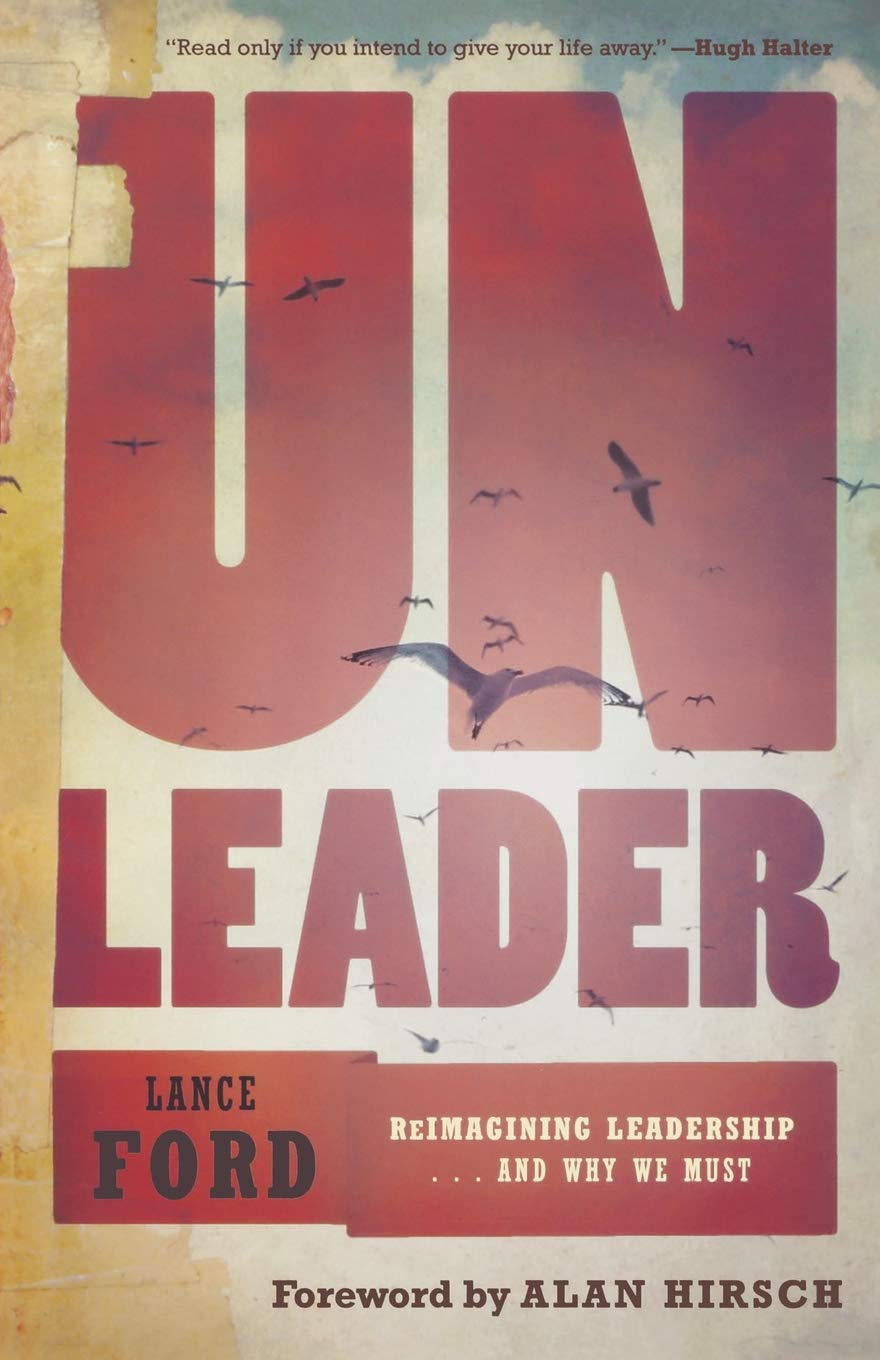
Unleader: Reimagining Leadership and Why We Must by Lance Ford


 Was Church God's Idea? by Marc Winter


Reimagining Church: Pursuing the Dream of Organic Christianity by Frank Viola


Finding Church: What if There Really Is Something More?
by Wayne Jacobsen


Saturday, December 21, 2024

Rethinking the Doctrine of Hell


 Rethinking the Doctrine of Hell


Anyone attending church is probably well indoctrinated into the concept of a fiery eternal hell awaiting the disobedient. It has become a major part of church doctrine for centuries, just accepted by most and taught as a given. But there is more and more information available now that shows another perspective, another way to see those verses, and another way to see God. To understand it all, you have to delve into the history of Christianity and find out how this originally got injected into church doctrine.

As power structures got entrenched in church systems over the centuries, the doctrine of hell was introduced to, first, protect the power of the clergy, and second, to keep the peons in line by instilling fear. There are many books out now on the history of this lovely doctrine, how it was taken from other traditions, then inserted into the Bible via mistranslations. Intentionally.


Original Schools of Thought

Those that have dissected the history behind the doctrine of hell explain the 3 different schools of thought prevalent in the first few centuries of church history. These ways of thinking were labeled Eternal Suffering, Conditional Immortality and Universal Reconciliation. 

There were 6 main centers or schools in the first several hundred years of Christianity, with 4 of them adhering to the Universalist view, one teaching Conditional Immortality, and one teaching Eternal Suffering. For the first 500 years of Christianity, the vast majority held to the universalist teaching. But the only one adhering to Eternal Suffering was located in Rome. Let that sink in.


Original Languages

Next, those that explore the history of this doctrine will go through the original languages, clarifying those words and what they meant at the time. In the Old Testament, the word is Sheol (the grave).

Sheol is the concept people devised in ancient times to imagine and describe the afterlife experience that they had no knowledge about.1

The word Sheol is translated as hell in some places and grave in others depending on the meaning the translators wished to convey in a particular passage. This has been a key finding in revealing how our beliefs have been manipulated. There are NO references to an eternal fiery hell in the Old Testament. None. Only Sheol as a place of the dead and the grave is mentioned. That’s it.

In the New Testament, Gehenna (or the Valley of Hinnom, an actual location near Jerusalem), Hades (like Sheol, the place of the dead), and Tartaroo (to confine in hell) are the 3 words that are inconsistently translated as “hell” in our Bibles today. Tartaroo appears only once in 2 Pet. 2:4 and is apparently a place for certain spirits (not people) until judgment. Hades is the equivalent of Sheol, the grave. The word most often translated “hell” is Gehenna an actual location that was essentially a body dump in previous centuries, a place of death and fire, and of child sacrifice, and later a garbage dump.

To understand how this word was used, the word “hyperbole” needs to be defined. That’s when you take things to an extreme to make a point. “You’re killing me here!” doesn’t mean you’re actually killing me. It’s understood as dramatization. This is the language used in New Testament times- hyperbole was commonly used and understood as taking things to an extreme to make a point. Jesus was saying that yes, you will pay a price. But it wasn’t until much later that Persian thought and Zoroastrianism crept in, the doctrine of hell took off, and an eternal fiery torment became that price.

Julie Ferwerda, in her book Raising Hell, quotes the New World Encyclopedia:

Jews who embraced this view of hell [Gehenna as a place of torment] included the group known as the Pharisees. The larger, dogmatically conservative Sadducees maintained their belief in Sheol. While it was the Sadducees that represented the Jewish religious majority it was the Pharisees who best weathered Roman occupation, and their belief in Zoroaster’s heaven and hell was passed on to both Christianity and Islam.2

Persian Zoroastrianism was the source. Romans accepted that belief and passed it on in their occupation. The Catholic Church, headquartered in Rome with its oppressive, controlling hierarchy used it to control the masses. And then history headed into the Dark Ages with its threat of hell always at the forefront.

The Bible was translated accordingly over the centuries to enforce this pagan belief:

Had our old English Bibles been translated directly out of the Greek instead of Latin, it’s very probable that the doctrine of eternal torment would never have found its way into our modern Bibles and theology at all. Many of these doctrines were strong-armed into the Church through major dissention and even bloodshed, with intolerant, oppressive Church leaders insisting that they were “led by the Spirit” on such matters.3


All Shall Be Saved

There are plenty of verses in the Bible that state that all will be saved. Here are a few:

I Cor. 15:22- For as in Adam all die, even so in Christ shall all be made alive. 
1Cor. 3:15- If any man's work shall be burned, he shall suffer loss: but he himself shall be saved; yet so as by fire.
Rom 5:18- So then as through one transgression there resulted condemnation to all men, even so through one act of righteousness there resulted justification of life to all men. 

Then there’s the simple logic- how could a loving God that demands forgiveness from us condemn the bigger part of His creation to everlasting torment? This one doctrine has engendered fear and even PTSD in people brought up under the influence of this horrific belief.

For much more in-depth information on this topic with detailed dissection of verses typically quoted to support the hell doctrine, get the books. Both Julie Ferwerda and Keith Giles have gone the extra mile to explain it all beautifully.

The purpose of the fire is to reveal and refine, not to torture and destroy.4


Raising Hell by Julie Ferwerda


Jesus Undefeated by Keith Giles


Red Flag Churches: Distinguishing Protection from Control
by Marion Wiley


1 Ferwerda, Julie. Raising Hell: Christianity’s Most Controversial Doctrine Put Under Fire. Sandpoint, ID: Vagabond Group, 2014, p. 40

2 ibid, p. 45.

3 ibid, pp. 57-58

4Giles, Keith. Jesus Undefeated: Condemning the False Doctrine of Eternal Torment. Orange, CA: Quoir Publishing, 2019, p. 103.

Image from Clipart Library

Saturday, December 30, 2023

Institutional Church- The Old Wineskin

We Need Another Reformation

 And the veil of the temple was torn in two from top to bottom. (Mk 15:38)

You yourselves like living stones are being built up as a spiritual house, to be a holy priesthood, to offer spiritual sacrifices acceptable to God through Jesus Christ. (1 Pet. 2:5)


When Jesus Christ died, the veil separating man from God was torn. The priesthood as it had been known was abolished and we are all now kings and priests. Theoretically. But you certainly can’t tell it when you walk into any church of any brand where there is always one person that is the “called” one with the anointing and a distinct separation between them and us. It’s called the clergy/laity divide, and it was supposed to have been abolished. We give mental assent to the concept of the priesthood of believers, but we certainly don’t practice it.

As I have navigated my way through deconstruction, I have found myself more and more convinced that the basic traditional church model is entirely man-made. With the institutional church model as the basis for practicing Christianity, the whole concept gets warped and becomes a breeding ground for abuse or burnout. One commenter in a Facebook group I watch believes that the traditional church model is a doctrine of devils. They may have a point.


The Building

Jesus replied, “Foxes have dens and birds have nests, but the Son of Man has no place to lay his head.”  Mt. 8:20


After reading Frank Viola’s book Pagan Christianity (link below), I started seeing how what we call “church” just isn’t what it should be. Viola goes through various aspects of the institutional church setup and points out the origins of each, starting with the buildings. The Greek word ekklesia translated “church” is never used to refer to a building. Instead, it always refers to the body of believers.

Buildings were erected as a means of making Christianity more palatable to pagans and Jews who had their temples. The sermon came from Greek oratory. Choirs and candles? The Romans. Steeples? I don’t even want to go there.

And from there, over the centuries, the building became the “house of God” (like you have to go into one of those places to find God), the rituals carried on inside those walls became “services”, a term never used in that sense in the Bible, and hierarchies developed. Christianity became just another religion.


The Clergy/Laity Divide

But Jesus called them to him and said, “You know that the rulers of the Gentiles lord it over them, and their great ones exercise authority over them.  It shall not be so among you.  (Mt. 20:25-26)  ...hast made us unto our God kings and priests: and we shall reign on the earth.”  (Rev. 5:10)

People want their leaders. The Jews insisted on a leader, a king, so God gave them Saul (1 Sam. 8).  It would appear we have not heeded that lesson.

Hierarchies.  The clergy/laity divide. I first think of the Catholic caste system with the Pope on down to the peons. But in spite of the 16th century Reformation, hierarchies have persisted, though in Protestant circles in modern times they are more like corporations with CEO’s.

Jesus said, “It shall not be so among you.” But it is, in every “church” building you care to walk into. There is a distinct division between the “called” and the not-so-called. The ones with titles and the ones without. The ones that hear from God and the ones that don’t, and so are dependent on the ones that do. We are all kings and priests, unless you step foot inside a “house of God”.

This, right here, is an absolute breeding ground for abuse. If you want to figure out why there’s so much abuse of all sorts being exposed in churches, look no further. We exalt one leader, give him the authority to speak for God, and we’re off and running. Abusers absolutely target churches because they can exalt themselves as God’s mouthpiece, convince their victims that submitting to abuse is what God wants, then demand that we all walk in forgiveness. What a tidy little package. We’ve created an utter playground for them.

We have been conditioned and raised to believe we need a leader, someone who hears from God to guide us. But we so readily forget what John said-

And as for you, the anointing which you received from Him remains in you, and you have no need for anyone to teach you. (1 John 2:27)   But when He, the Spirit of truth, comes, He will guide you into all the truth.  (John 16:13)

But the system passed down for generations insists that we do need someone to teach us, making us dependent on someone else’s opinions and interpretations, and undermining our confidence in our own ability to hear from God.  The need for a pastor is a deception, plain and simple, and I am coming to believe more and more that this insistence on a pastor as a leader is what has kept the body of Christ in infancy, incapable of fulfilling the Gospel.


Patriarchy

There is neither Jew nor Greek, there is neither bond nor free, there is neither male nor female; for ye are all one in Christ Jesus. (Gal. 3:28-29)

The insistence on a leader runs hand-in-hand with the patriarchal mindset, the dogged determination to keep women in their places throughout the centuries. Patriarchy gives the green light to narcissistic preachers and husbands to run over the women in their lives.  “There is neither male nor female”, but we’ve all seen what goes on anyway.

Beth Allison Barr’s book The Making of Biblical Womanhood  traces the “biblical womanhood” mindset throughout history and dissects many of the verses that have been used to keep women in their place. It’s a great read I highly recommend, link below.


Titles

But as for you, do not be called Rabbi; for only One is your Teacher, and you are all brothers and sisters.  And do not call anyone on earth your father; for only One is your Father, He who is in heaven.  And do not be called leaders; for only One is your Leader, that is, Christ. (Mt. 23:8-10)


Can you get any plainer than that? There’s a reason for this. Titles, positions, offices are just plain dangerous. They feed pride. Addressing the upper echelon (The Big Cheese) of church hierarchy with a title just feeds the monster, making the division between laity and clergy, leaders and followers, that much more pronounced. The terms “father”, “pastor”, “reverend” (which is my personal fav), “deacon”, or if you’re across the pond, “vicar”, they all exist as a way to separate the favored from the masses, the gifted from the not-gifted, the called from the not-called. The whole system is divisive. And in abusive churches particularly, the leadership LOVES titles, and demands that titles be used when addressing them, further cementing the required submission of their victims. Titles feed their need for control.

Abuse is obviously a major pitfall of this system. But it works the other way as well with burnout. People have huge expectations of the pastor or whatever title the leader has. The one in charge is expected to do whatever ridiculous expectations are put on him/her, while the rest sit in the pews and do relatively little. According to Christianity Today as of Nov. 16, 2021, 38% of pastors were considering leaving the ministry.  This kind of burden was never supposed to be.


Time for a New Wineskin


But no one puts a patch of unshrunk cloth on an old garment; for the patch pulls away from the garment, and a worse tear results.  Nor do people put new wine into old wineskins; otherwise the wineskins burst, and the wine pours out and the wineskins are ruined; but they put new wine into fresh wineskins, and both are preserved. (Mt. 9:16-17)

The old wineskin of the traditional, institutional, man-made church system that was essentially derived from paganism one way or another, needs to go. The traditional church model breeds dependence on man, not God. We have been programmed to depend on rituals to qualify as Christians- scripted, scheduled services in a building, tithing, etc., and on the callings of others, like there’s no calling on our lives. I drive by churches now, and just grieve at the waste of money on those buildings, and the oppression/dependence they (mostly) unwittingly promote.

There are plenty of books now that explore the possibilities, calling one concept "organic church". Basically, they are describing home groups that are much more fluid, with facilitators that encourage group participation, sharing what God is doing, what He's saying to individuals.  These groups aren't set in stone- they move from location to location, and dissolve and redevelop over time. I believe this model is much more apt to allow individuals to develop their own callings. (I've linked a few of those books below.)

I had come across these books as I was researching the concept of spiritual abuse which was practiced in a church I'd attended for 12 years. Pulling out of that has led me to pull out of the whole man-made system, hoping for something better. If you are interested,  Red Flag Churches is the free ebook I put together on what I have learned about spiritual abuse.

I understand how hard it is to get your mind around Christianity without all the institutional trappings we have come to accept. We assume that to be a Christian, we must adhere to the accepted rituals, the acknowledging of an anointing on those in charge, and the assumed lack of anointing on the rest of us. And let’s not forget the undercurrents or outright in-your-face patriarchal mindset so many have been raised with.

We are all kings and priests. We all have the Holy Spirit speaking to us. We have no need for any man to teach us. There is neither male nor female. We are all one in Christ Jesus. We need a new wineskin that will allow this kind of expression.

It may well take another great awakening, another reformation to bring us into the fullness of the Body of Christ as we should be. The deconstruction movement may well be the precursor to such a revolution. It can’t come soon enough for me.

Cease ye from man. (Is. 2:22)


 I had put together a couple posts quite some time ago along the same lines-

Liquid Church: The Shape of Church to Come

The Dechurched, the Wilderness Experience, and the Next Move of God


 Recommended Reading


Pagan Christianity by Frank Viola

 Traces the history of all the traditions we call "church".


The Making of Biblical Womanhood by Beth Allison Barr

Recounts the history of Complementarianism, or biblical womanhood throughout the centuries.


The Church Can Go to Hell by Disember Rose Wattleton

Disember describes her abusive experiences in church and how she's come through it all.


 All My Knotted Up Life by Beth Moore

Beth's memoirs, detailing the trials she's gone through, in particular the walls she slammed up against in the name of patriarchy and why she chose to leave the SBC.


Reimagining Church by Frank Viola

Church done from a biblical model, not the institutional version we all know. If you are in deconstruction, I recommend all of Viola's books, Finding Organic Church in particular.


Finding Church: What if There Really Is Something More? by Wayne Jacobsen  

This book has absolutely hit the nail on the head. Wayne clearly shows how the true Church is expressed by individuals leading their lives by the promptings of the Holy Spirit and demonstrating the love of God to those around them. It has little to do with "church" as we've know it.


An Irreligious Faith: How to Starve Religion and Feed Life by Glenn Hager

This is Hager's personal account of his church experience and what led to his leaving institutional church. He has a lot of great ideas for the church of the future.


Red Flag Churches: Distinguishing Protection from Control

This recounts my experiences in a spiritually abusive church and what I have learned since leaving.  Free download in several formats.


Are You in a Red Flag Church?

Spiritual Abuse Basics: Are You in a Red Flag Church?   Take heed that no man deceive you. Mt. 24:4   Do you attend a church where ev...